Let's talk about the thing you're worried about
Introducing a lemon vibrator or any clitoral vibrator into partnered sex feels risky. You're probably imagining an awkward conversation, rejection, or worse—the unspoken implication that your partner isn't enough. None of that has to happen.
Here's the truth from years of working with couples: partners who can talk about toys are partners who can talk about anything. This isn't a threat to your connection. It's an invitation to deepen it.
Why couples avoid the conversation (and why they shouldn't)
The silence usually comes from one of three places. Either you're worried your partner will feel replaced or insulted. Or you think bringing it up will make them think you're unhappy. Or—and this one's real—you've never seen a model for how this conversation actually works, so it feels like uncharted territory.
What research on couples and sexual satisfaction tells us is simple: partners who communicate about preferences, boundaries, and desires report higher sexual satisfaction and relationship satisfaction overall. Not lower. Not more conflict. Higher.
A lemon vibrator isn't a replacement. It's an addition. It's a tool that can help you access pleasure faster, deeper, or in ways that solo stimulation sometimes can't. That's good information for your partner to have.
Before you say anything: get clear on your own why
The conversation works best when you know what you actually want. Not what you think you should want, and not what you're guessing your partner might want. Your want.
Ask yourself: Am I interested in this because I've been curious? Do I want more intense sensation? Do I want to try something together, or am I mostly interested in solo play? Do I want my partner's hands free so they can touch me elsewhere? Would I like them to use it on me, or would I prefer to use it myself while they're involved?
There's no right answer. But your answer matters, because it changes how you frame the conversation. "I've been curious about trying a clitoral vibrator" is different from "I want you to use a toy on me." One invites exploration. The other sets a specific expectation.
Get specific with yourself first.
The actual conversation: timing and framing
Don't do this in bed. Do it somewhere neutral, clothed, not during sex or right after rejection. A walk, a car ride, the kitchen at a normal hour. The goal is to sound like you're discussing something important but not heavy.
Start with appreciation and clarity. "I love our sex life, and I've been thinking about something that might be fun to explore together. I'm curious about trying a clitoral vibrator. I'm telling you because I want us to figure this out as a team, and I want to know how you feel about it." That's it. You've named the thing, positioned it as joint exploration, and opened the door.
Then you listen. Don't defend. Don't over-explain. Some partners will be immediately curious. Others will have questions. Some will need time. All of those reactions are fine.
If they ask why, tell the truth. Not "because you're not enough," but "because I want to experience this sensation" or "because I'm curious" or "because I think it could feel amazing for both of us." If they ask whether you want them involved or if you want to do it solo, answer honestly.

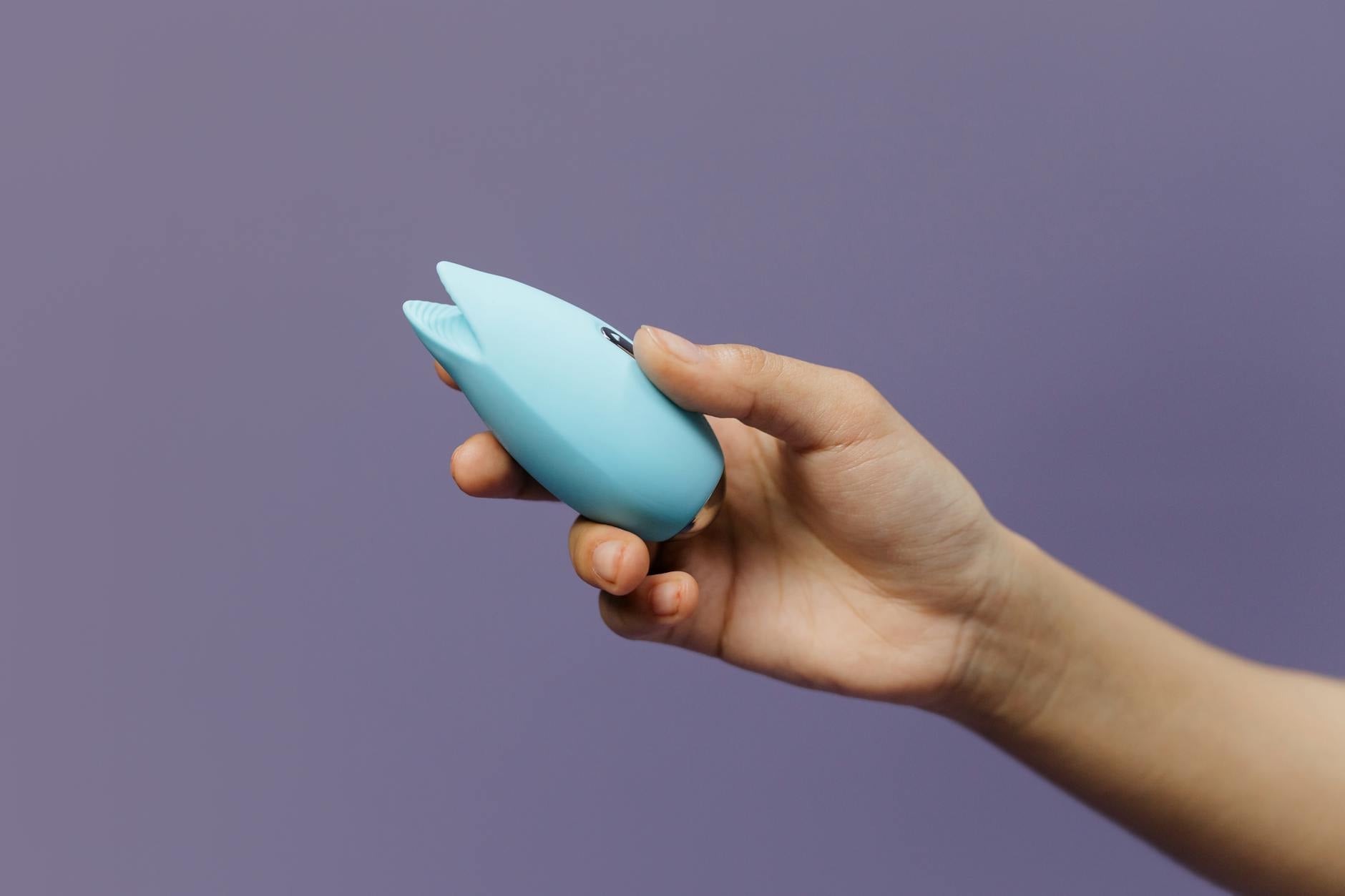
Photo by Olga Lioncat on Pexels
Common partner concerns and how to address them
"Will I feel left out or inadequate?" This is the big one. Frame it directly: "This isn't about what you're not doing. It's about adding something that feels good. You're still here, still involved. The toy is just doing one specific thing." If they want to use it on you, brilliant. If they want to be beside you while you use it solo, also brilliant. The point is collaboration.
"Are you unhappy with our sex life?" A lemon vibrator isn't a distress signal. It's a pleasure signal. Say that. "I love what we have. I'm interested in expanding it." There's a difference between dissatisfaction and curiosity, and your partner deserves to know which one this is.
"Is this going to become a dependency?" Some partners worry that using a toy will make partnered sex feel boring or insufficient by comparison. The research doesn't back this up. But the reassurance they need is: "I want this as something we explore together and separately. It doesn't replace you or what we have. It expands it."
How to introduce a lemon vibrator into actual play
Once you've both agreed to try it, start slow and communicate through the experience.
First time, do it during solo play while your partner is aware and nearby, but not necessarily watching. This gives you space to get comfortable with the sensation and learn what you like without performing. Some partners find it hot to hear. Others prefer to join in once you're past the initial awkwardness.
When you're ready to use it together, lemon vibrators and other clitoral vibrators work beautifully in partnered sex because they're small and quiet enough that your partner can stay close. They can penetrate you while you use the vibrator on your clitoris. They can use it on you while their hands are elsewhere. They can hold you while you use it solo.
Talk through what you want. "I'd love it if you used this on me while we're together" or "I want to use this solo while you watch" or "Can you use it on me and then I'll use it on myself?" Each of these creates a different intimacy.
Start at low intensity. Most lemon vibrators offer multiple settings, and your body needs time to acclimate to the sensation. What feels good at setting 1 might feel intense by setting 3.
Reading your partner's comfort in the moment
Just because they agreed in conversation doesn't mean every moment will feel good. Bodies and moods shift. Pay attention to their breathing, their pace, whether they're asking questions or staying engaged.
If something feels off, pause. "You okay?" is a full sentence. Sometimes the answer is yes, they're fine, just adjusting. Sometimes it's no, they want to shift something. Both are good data.
After, talk about it if it feels natural. What felt good? What was awkward? Do you want to try again, differently? This feedback loop is what turns a nervous first experience into something you actually want to repeat.
The boundaries conversation that matters
Beyond the toy itself, talk about the edges. Is this something you do together, solo, or both? Is it during partnered sex only, or also during solo time? What if one person wants it and the other doesn't on a particular night? What if someone wants to use it solo without the other partner present?
These conversations feel clinical, but they actually create freedom. You both know what to expect. There's no guessing. No resentment.
Why lemon clitoral vibrators work particularly well for couples
Unlike larger toys or wand vibrators, lemon vibrators are sized for precision. A partner can use one on you while still being close, still penetrating, still maintaining eye contact. The intensity is direct without being overwhelming. And they're portable enough that introducing them doesn't feel like a big production.
If you're new to toys and want to ease in, starting with a lemon sucker or compact clitoral vibrator is often easier than jumping to something larger. Your partner might also feel less intimidated by something smaller and more elegant.
Many couples tell me that using a toy together actually deepened their communication about sex overall. Once you've had one honest conversation about pleasure, the next ones get easier.
The permission you probably need
Your partner's pleasure is important. Your partner's acceptance of your pleasure matters. But here's what you also need to know: your desire for sexual exploration is legitimate even if your partner is nervous about it at first. You're not selfish for being curious about a lemon vibrator. You're not demanding for wanting to try something.
Most partners come around. Some need time. And some find that once they see how much joy it brings you, they want to be part of it.
This conversation is one of the best investments you can make in your sexual relationship. Not because toys are magic. But because partners who can talk about what they want, who can ask for it, who can collaborate on pleasure—those partners build lasting intimacy.
FAQ
How do I bring up lemon vibrators if my partner thinks toys are weird or impersonal?
Frame it around sensation, not replacement. "I'm curious about a specific sensation I've been thinking about, and I found a tool that does it. I'd love to explore this with you." Many partners feel less threatened when they understand the toy is about a physical experience, not an emotional one. Let them know you value what you have and you're interested in adding to it, not subtracting.
Can I use a lemon clitoral vibrator during partnered penetration?
Absolutely. Many people find that combining clitoral vibration with penetration intensifies orgasm significantly. Start at a lower setting to avoid overstimulation, and communicate with your partner about pace and intensity. Some couples use it during specific moments of sex, others use it throughout.
What if my partner wants to use a lemon vibrator on me but I'm nervous about that intimacy?
That's valid. You can ask them to practice on you during non-sexual moments first, so you both get comfortable with how it feels and sounds. You can also start with solo use and move to partnered use once you're confident. Nervous doesn't mean no—it means you might need a gentler introduction.
Should we buy the toy together or should one person choose it?
Both approaches work. Some couples find it hot to shop together and make it collaborative. Others prefer one person to research and choose, then introduce it as a gift or surprise. Know your partner's style. If they like autonomy and input, involve them. If they like being surprised, pick something you think they'll love and present it.
How often should couples be using lemon vibrators together?
Whatever feels right. Some couples use them every time they have sex. Others use them occasionally, as a special thing. There's no frequency requirement or ideal. What matters is that it feels good to you both and that you're communicating about what you want.
What if one partner wants to use a clitoral vibrator and the other really doesn't?
That's a conversation too. "I'm interested in this, and I want you to be comfortable. What do you need from me for that to be okay?" Sometimes it's reassurance. Sometimes it's boundaries—maybe they don't want to be present, or they want to be involved differently. Compromise usually exists somewhere. And if it doesn't, you get to decide how important this is to you.
References and further reading
Gottman Institute. (2023). Research on communication and sexual satisfaction in long-term partnerships. The Gottman Method: Research and Practice.
Perel, E. (2018). Mating in Captivity: Unlocking Erotic Intelligence in Long-Term Relationships. HarperCollins.
Emens, A. (2014). The pleasure gap: Why the orgasm is the most important metric in your sex life. The Atlantic.
If you're looking for more guidance on navigating intimacy and communication with your partner, our contact page is a great place to start. We're here to help with questions.