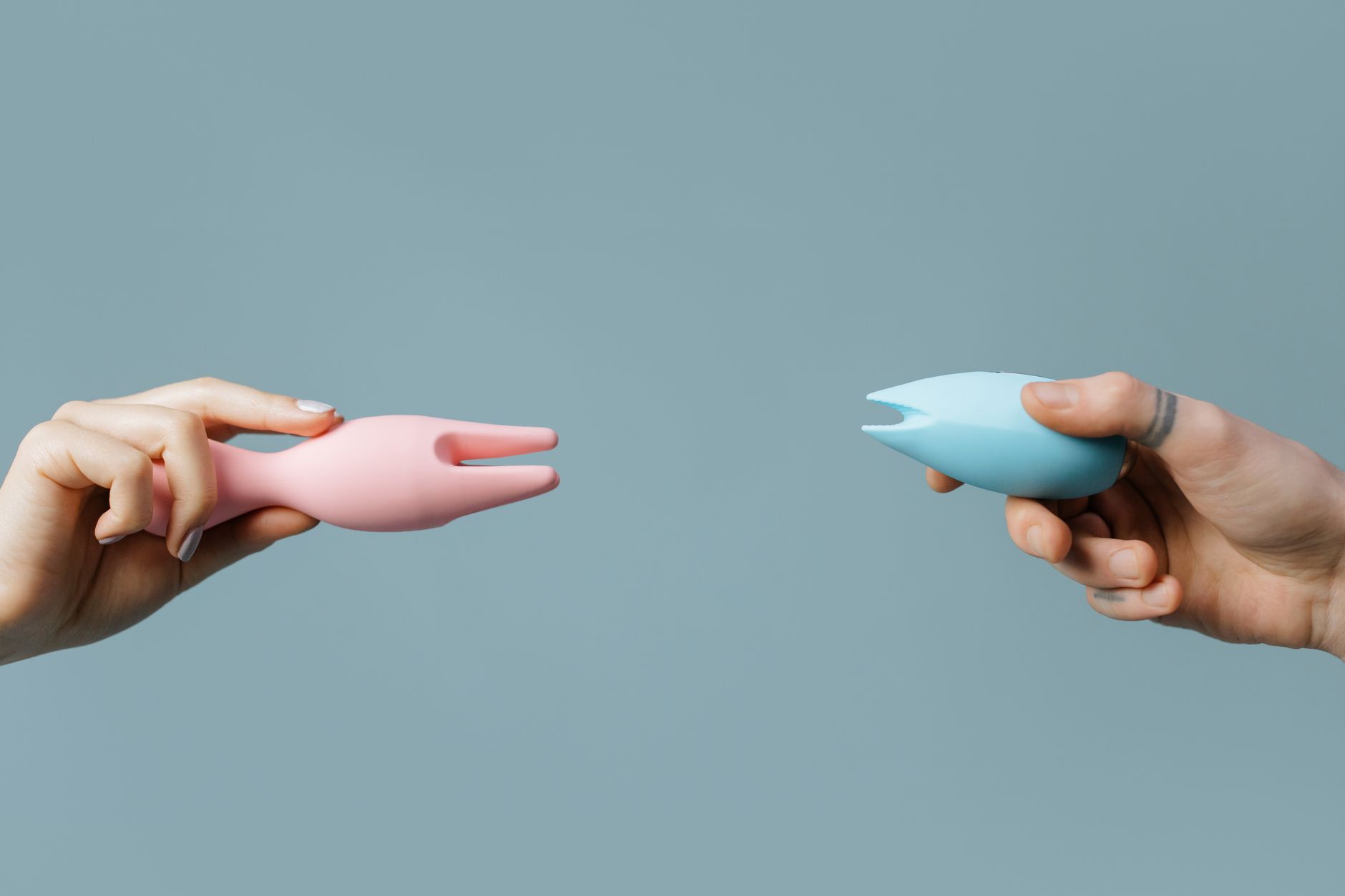
Let's talk about what happens after 20 years
Most long-term couples hit a predictable wall around year 12 to 15. The sex doesn't vanish. It calcifies. You know the rhythm, the positions, the approximate duration. Your partner knows your body better than you do. And somehow, that expertise makes everything feel smaller.
This isn't a crisis. This is a physiological fact that no one explains clearly. Your nervous system stops registering novelty as threat, so arousal flattens. Your brain, which evolved to notice new stimuli, gets bored with the familiar ones. Adding a lemon clitoral vibrator isn't about fixing what's broken. It's about waking up what's gone numb from repetition.
Why novelty matters more than you think
Your brain has a feature called "habituation." Repeated stimulation registers as background noise. A partner touching you the same way for two decades is luxury, but it's also static. Research on long-term couples shows that introducing new sensations (different textures, speeds, patterns) reactivates arousal regions in the brain that had gone dormant.
A lemon vibrator works here because it's radically different from partner contact. The suction mechanism stimulates nerves in ways fingers or penetration can't replicate. For couples who've explored most positions and techniques, this novelty acts like a reset button.
The other thing that changes after decades: your bodies change. Hormones shift. Sensitivity maps move. A vibrator that works for you independently changes the power dynamic in the relationship. You're not waiting for arousal to match. You're arriving ready.
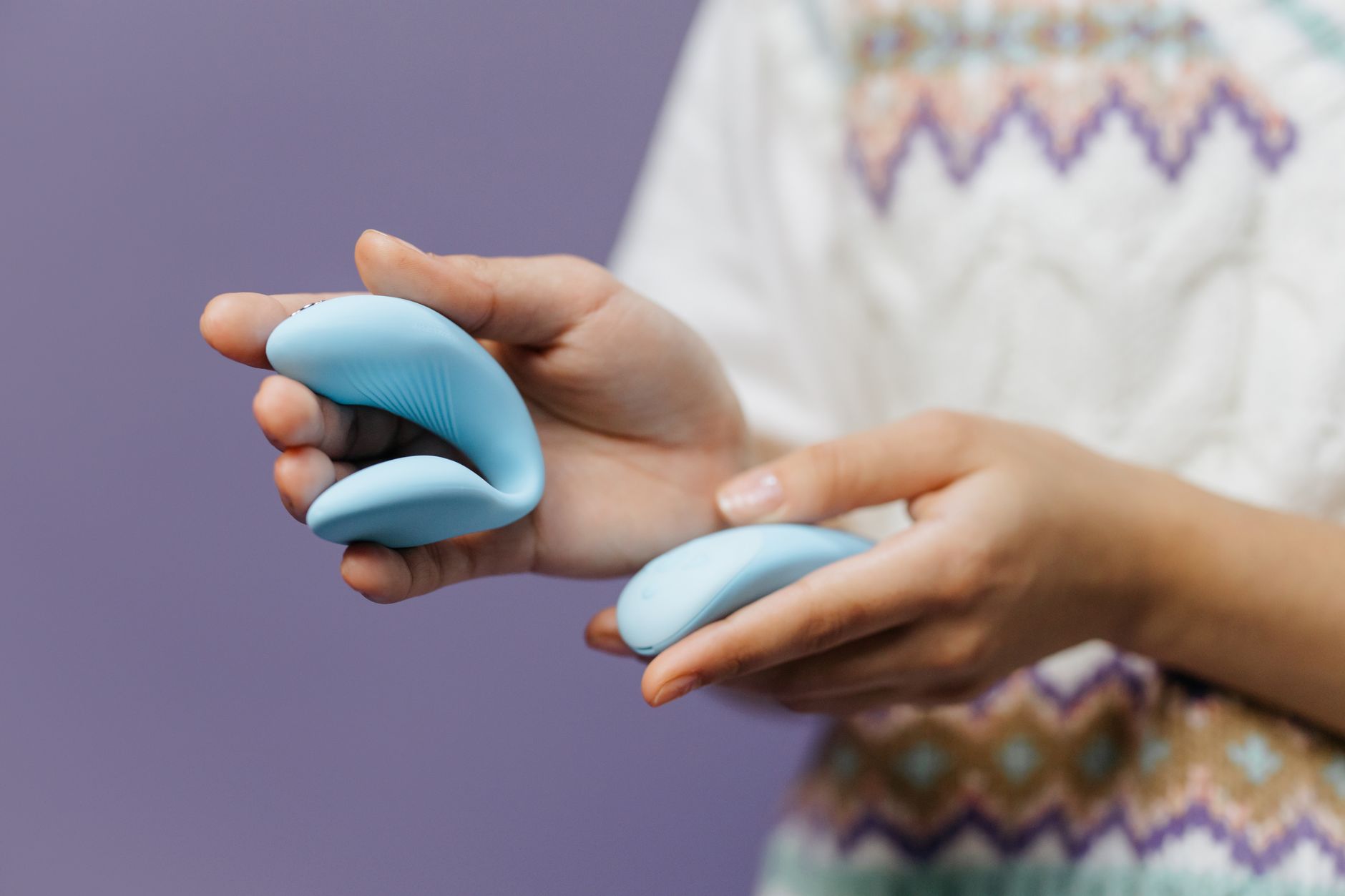
Photo by cottonbro studio on Pexels
How to introduce a vibrator without it feeling like a rejection
This is where most long-term couples stumble. Adding a vibrator can feel like an indictment. "Am I not enough?" Actually, no. You're not enough. Neither is your partner. That's not a flaw. That's just bodies.
Frame it accurately: "I want to feel things I haven't felt with us in a while, and I want to share that with you." Not "I need this because you're not doing something right." Not "I want to do this alone." The specificity matters because it's true.
Start small. Use it solo a few times first. Then invite your partner to watch, to hold it, to control the settings while you're together. A lemon clitoral vibrator like the Lem is intuitive enough that letting your partner experiment with the intensity settings becomes foreplay, not logistics.
The specific mechanics that unlock sensation
After years with the same partner, direct stimulation can feel either monotonous or, paradoxically, too intense. The suction mechanism on lemon vibrators sits in this interesting middle ground. It's not the sustained pressure of penetration. It's not the repetitive vibration of a standard vibrator.
Start on the lowest setting. Your nervous system needs time to register this as new, which means it'll actually feel like more than it is. Many couples find that pattern 2 or 3 on the Lem produces the most interesting sensation after 20 years together, not the highest intensity.
If you use it together, have your partner apply it in a different location or angle than they usually touch you. Even a millimeter of variation reactivates attention. The goal isn't intensity. It's novelty.
Timing and rhythm in established relationships
Long-term couples often fall into a pattern where sex happens at the same time, lasts the same duration, follows the same sequence. This predictability is efficient, but efficiency kills arousal.
Using a lemon vibrator offers permission to break that script. If you typically have sex Sunday mornings, try Wednesday evening with the vibrator. If you usually spend 30 minutes, spend 15 with this one element, stretched across longer foreplay. The unfamiliarity of when and how long matters as much as the novelty of the tool itself.
Many established couples report that introducing the vibrator actually slows them down, which sounds counterintuitive but makes sense. You can't rush suction stimulation the way you can rush traditional touch. You're both paying more attention.
When to involve your partner and when to use it alone
Here's what I see repeatedly in my practice: couples who've been together for decades benefit most from a hybrid approach. Use the lemon vibrator solo sometimes, which helps you understand your own pleasure independent of your partner's pace or preference.
Then bring it into partnered sex, but not every time. Variability matters. If every encounter includes the vibrator, you've just swapped one rut for another. The power of novelty is that it's intermittent. Surprise your partner. Let them surprise you.
If you have low sensation after long-term numbness, solo exploration is especially valuable because you're not managing your partner's feelings while you're rebuilding your own.
The conversation that comes after
After 20 years, you know how to communicate about difficult things. You've fought and made up. You've weathered life transitions. Use that skill here.
Don't assume the vibrator "worked" if you had an orgasm. Ask your partner what they noticed. Did the change in your breathing shift something for them? Did watching you experience new sensation reignite their desire? The best outcome from adding a lemon clitoral vibrator isn't just physical. It's the reminder that you both still have the capacity to surprise each other.
If your partner resists, that's real information. It's not always a rejection of the tool. Sometimes it's anxiety about aging, about not being "enough," about change. Those are relationship conversations, not vibrator conversations. Address them separately.
Common obstacles and how to navigate them
One: the vibrator feels clinical or performance-focused. Solution: use it during foreplay, not as the main event. Make it one element among many, not the point of the encounter.
Two: your partner feels threatened. Solution: frame it as expansion, not replacement. The vibrator doesn't do what your partner does. It does what nothing else can.
Three: you're not sure how to integrate it with penetrative sex. Solution: use it before, not during (unless you're both comfortable with that). Let it be part of arousal-building, not simultaneous stimulation.
Four: after a few weeks, it stops feeling novel. Solution: actually expected. That's when you experiment with different settings, different contexts, different timing. Novelty requires ongoing attention, not a one-time purchase.
Why decades matter
Couples in their 30s and 40s can sometimes sustain pleasure on passion alone. By your 20th year together, passion has metabolized into something steadier. Affection. Trust. A kind of intimacy that's built on years of witness.
That's not a loss. But it does mean that physical arousal requires intentionality. A lemon vibrator is one form of that intentionality. It's not the deepest expression of your connection. It's a tool that allows the deepest connections to keep producing sensation.
You're not starting over. You're adding depth to something already solid.
FAQ: Using lemon vibrators in long-term relationships
Does using a vibrator mean my partner isn't satisfying me?
Not even slightly. It means your nervous system has adapted to familiarity. Adding a vibrator is like adding a new ingredient to a dish you've perfected. The original ingredients are still essential. The new one just makes you taste it again.
How do I bring this up without hurting my partner's feelings?
Be specific and frame it as your evolution, not their failure. "I've been noticing I want to explore different sensations, and I'd like to share that with you" works better than "We need to fix our sex life." If they're hesitant, ask what they're worried about. Usually it's not the vibrator. It's anxiety about what the vibrator represents.
Should I use it during sex with my partner or alone?
Both, on different occasions. Solo use teaches you what you like independent of your partner's timeline or preferences. Partner use shows your partner new ways to pleasure you and keeps the relationship dynamic fresh. Vary it.
What if my partner wants to use it on me but it doesn't feel good?
Feedback is your job here. "A bit lower, slower, gentler" isn't rejection. It's the thing that lets your partner actually learn what works. Many couples find that the vibrator gives permission to have more specific conversations about touch than they've ever had.
Is there a way to use a lemon vibrator that feels less awkward?
Integrate it into foreplay gradually. Don't announce it like a product launch. Have it present during a partnered session. Let curiosity do the heavy lifting. And remember: awkwardness usually fades after the third time. Novelty always feels a little strange at first.
What if we've been together 30 years and we're worried we're too old for this?
You're not. Pleasure doesn't have an expiration date. Couples who continue to introduce novelty and stay curious about each other's bodies tend to report higher satisfaction in their 50s, 60s, and beyond than couples who accepted the narrative that sex gets smaller with age. You're the opposite age. You have permission.
The deeper shift
Introducing a lemon vibrator into a long-term relationship is often a proxy for a bigger conversation. It's permission to stop accepting the narrative that desire naturally declines after two decades. It's an acknowledgment that boredom isn't destiny.
Most established couples end up using the vibrator for a few months, then less frequently, then occasionally. That's fine. The value wasn't in the tool. It was in the breaking of pattern, the reminder that sensation was still possible, the conversation it opened.
You don't have to choose between comfort and discovery. You can be deeply known to someone and still be unknown to yourself. A lemon clitoral vibrator bridges that gap. It gives you access to sensation you haven't felt in years, and it lets your partner witness that rediscovery.
That's where the real novelty lives. Not in the device. In seeing each other again.