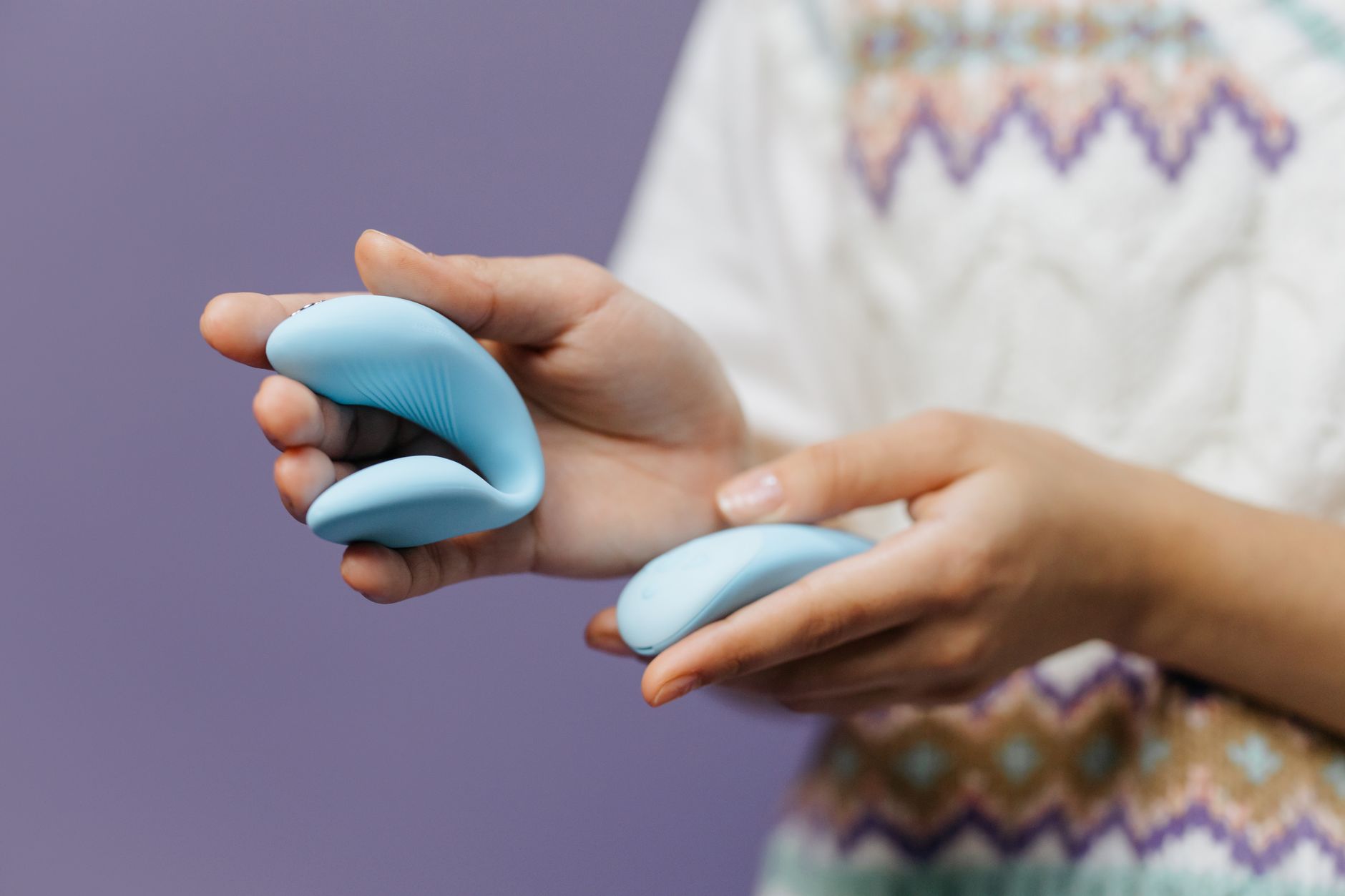
Let's be real about long-term couples and pleasure
Twenty years, ten years, even five years together and most couples aren't talking openly about what feels good anymore. You've settled into rhythms. You know each other's bodies. And somehow that familiarity becomes a kind of ceiling. Sensation flattens. Novelty dies. You both feel it, but naming it feels exposing. Like admitting the foundation cracked.
Here's what I see in my practice: couples who've been together forever often want to explore lemon vibrators or other tools not because something is broken, but because they want permission to build something new together. They want that electric feeling of discovery without starting over. They want the safety of their partner and the thrill of not knowing exactly what happens next.
That's not a midlife crisis. That's actually the healthiest impulse in a long-term relationship.
Why long-term monogamy changes sensation over time
Your nervous system learns patterns. After years of the same rhythm, the same pressure, the same speed, your body starts to anticipate. Anticipation is the enemy of intensity. Your brain stops firing as hard because it already knows what's coming. It's not about the person. It's neurology.
Add that most long-term couples fall into patterns that center one person's pleasure over the other's. If one partner usually receives and the other usually gives, the receiver's nervous system gets very good at one type of input. The giver stops exploring because "this is what works." You both get locked in.
Clitoral vibrators, especially air suction tools like the Lem, work differently than hands or standard vibration because they introduce a stimulus your nervous system hasn't learned to predict. That unpredictability? That's where sensation comes back online.
The conversation that has to happen first
You can't just bring a lemon vibrator to bed and expect magic. Couples who succeed with new tools have usually had one difficult conversation first. Not sexy. Not spontaneous. But necessary.
The conversation sounds like: "I want us to explore something new together. Not because anything is wrong. Because I think we're both settling for what's easy instead of what feels best. I want you. I want us to feel alive again."
That last part matters. Say it explicitly. Long-term partners often assume exploring new tools means "you're not enough anymore." You're clearing that up before anything else happens.
If your partner seems hesitant, most resistance isn't about the toy. It's about vulnerability or shame. People raised to believe pleasure is a private thing suddenly sharing their pleasure with a partner differently than before feels risky. Some partners worry they'll become unnecessary. Others worry about judgment.
Respond with specificity: "I want to do this together. I want to watch you feel good. I want us to learn something new as a team."
How air suction vibrators work differently in long-term partnerships
Standard vibration feels like what it is. Your body knows vibration. If you've been using the same rhythm for years, vibration alone won't create that surprise your nervous system needs.
Air suction technology (the kind Mylem Official's clitoral vibrators use) stimulates through gentle pressure and wave patterns that feel fundamentally different. The sensation is less predictable. Less "on and off" and more fluid. Your nervous system can't anticipate it the same way.
For couples specifically, this changes something important: the receiver isn't passive. They're actively responding to something new, which means the giver sees real-time reactions they may not have seen in years. Suddenly there's communication happening without words. That communication brings partners closer.
Start at a lower intensity. Most long-term couples make the mistake of jumping to whatever feels strongest. With lemon suction vibrators, intensity isn't the goal. Sensation is. You want your nervous system to wake up, not to override everything else.
The logistics that actually matter
Timing: plan this for when you're both unhurried and at least mildly interested. Don't introduce new tools during obligatory sex or when you're exhausted. That sets them up to feel clinical rather than playful.
Lubrication: yes, even if you've never needed extra lubrication before. The sensation of air suction is more pronounced with a thin layer of water-based lube. It increases sensitivity.
Positioning: whoever is receiving should be in a position where they can fully relax. Tension kills sensation. That's usually reclined, propped up, with legs slightly apart. The giver should be comfortable too. If you're holding a toy and your arm is numb, nobody's having a good time.
Talk during: "Does this feel good?" or "Should I try this pattern?" removes the pressure of the receiver having to perform orgasm or pretend to enjoy something they don't. It also keeps both of you present instead of disappearing into your own heads.
What changes when couples commit to trying
Couples who stick with this usually report three shifts:
First, rediscovering sensation individually means they start talking about their own pleasure again. Not just during sex. Just "hey, I like this" or "I've never tried that." Pleasure becomes a topic instead of a taboo.
Second, the giver learns their partner in a new way. If you've been assuming you know what your partner enjoys, watching them respond to air suction vibrators reveals surprises. Maybe they love a pattern you never would have guessed. Maybe the intensity they liked ten years ago isn't what they want now. That ongoing discovery is what keeps couples engaged.
Third, shame often disappears. Couples worry that using tools means admitting failure. Actually the opposite is true. Using lemon vibrators or any clitoral vibrator means saying "we're worth the effort. Our pleasure matters enough to keep learning."
Common blocks and how to move through them
If it doesn't feel amazing the first time, don't throw it out. Your body needs permission to feel something new. That takes a few tries. Most couples report the second or third experience is where things click.
If one partner feels anxious watching, that's usually about past shame or cultural messaging, not about the tool or the experience. Talk about it afterward. "I noticed you seemed quiet. What was that about?" creates space for honesty instead of resentment.
If orgasm doesn't happen, that's also fine. The goal isn't orgasm. The goal is sensation and connection. Orgasm is a possible bonus, not the metric of success.
If you're worried about communication being awkward, that's actually the point. Awkwardness means you're doing something unfamiliar. Unfamiliar is where growth happens.
Why this works for couples who've "done everything"
Long-term couples often feel they've exhausted their options. They've tried different positions, different times of day, sometimes other partners. But most haven't actually changed the fundamental stimulus.
Lemon vibrators and air suction technology offer something unique: a tool that shifts sensation without asking you to change your partner or your commitment. You're exploring with the person you've already chosen.
That's not settling. That's deepening. And deepening is what keeps long-term monogamy from becoming routine. You want sensation back after a decade of the same rhythms? Start with the conversation. Then pick a tool designed for exploration, not performance. Then show up curious instead of goal-oriented.
Your nervous system will do the rest.
People also ask
How do I introduce a lemon vibrator to my long-term partner without it feeling like rejection?
Frame it as an invitation, not a critique. "I want us both to feel more" is different from "this isn't working anymore." You might also lead with your own desire: "I've been thinking about trying something new for myself, and I'd love you there." That positions the tool as exploration, not judgment.
Should we use a lemon vibrator together or separately first?
Together usually works better for long-term couples because it removes shame and introduces novelty as a shared experience. If one partner feels anxious, they might try solo first to understand the sensation without pressure to perform. But avoiding it together usually extends the awkwardness. Rip the band-aid together.
What if my partner doesn't want to try clitoral vibrators at all?
That's their boundary and that's valid. You can explore air suction vibrators solo if that's what you want. But if both of you are interested in reconnecting and they're resistant to tools specifically, dig deeper. Is it cultural shame? Worry about adequacy? Fear of judgment? Those conversations often matter more than the tool itself.
How long does it take to feel benefits from using a lemon vibrator as a couple?
Most couples notice a shift in communication and ease after two to three times trying together. Sensation usually peaks around week two or three when your nervous system stops treating it as "new" and just treats it as pleasurable. Some couples report that just having the conversation and committing to trying changes the emotional dynamic before the physical one does.
Is air suction vibration like the Lem better than traditional vibration for long-term couples?
It's different, not better. Air suction offers novelty and unpredictability, which is what most long-term couples need. But if your partner already loves their current vibrator, novelty might come from changing the context (different room, different time of day) rather than the tool. The best toy is the one you both want to use.
Do I need to keep using a lemon vibrator indefinitely to maintain the benefits?
Not necessarily. What often matters more is that you've broken the routine and proven you're both willing to adapt. Some couples use the tool regularly. Others use it every few months as a way to reconnect. The real benefit is the conversation and the commitment to each other's pleasure, not the tool itself. Though honestly, most couples who try it enjoy it enough that it becomes part of their rhythm naturally.
The bottom line
Twenty years isn't the end of passion. It's the middle chapter, and it requires different skills than the beginning. You need curiosity instead of certainty. You need to stay willing to not know what your partner will feel like this time.
Tools like lemon vibrators or air suction clitoral vibrators aren't shortcuts. They're invitations. The real work is saying "I want us to keep discovering each other," and meaning it.
If you're ready to explore what that looks like for your relationship, start with the conversation. The tool matters less than the commitment. Everything else follows.