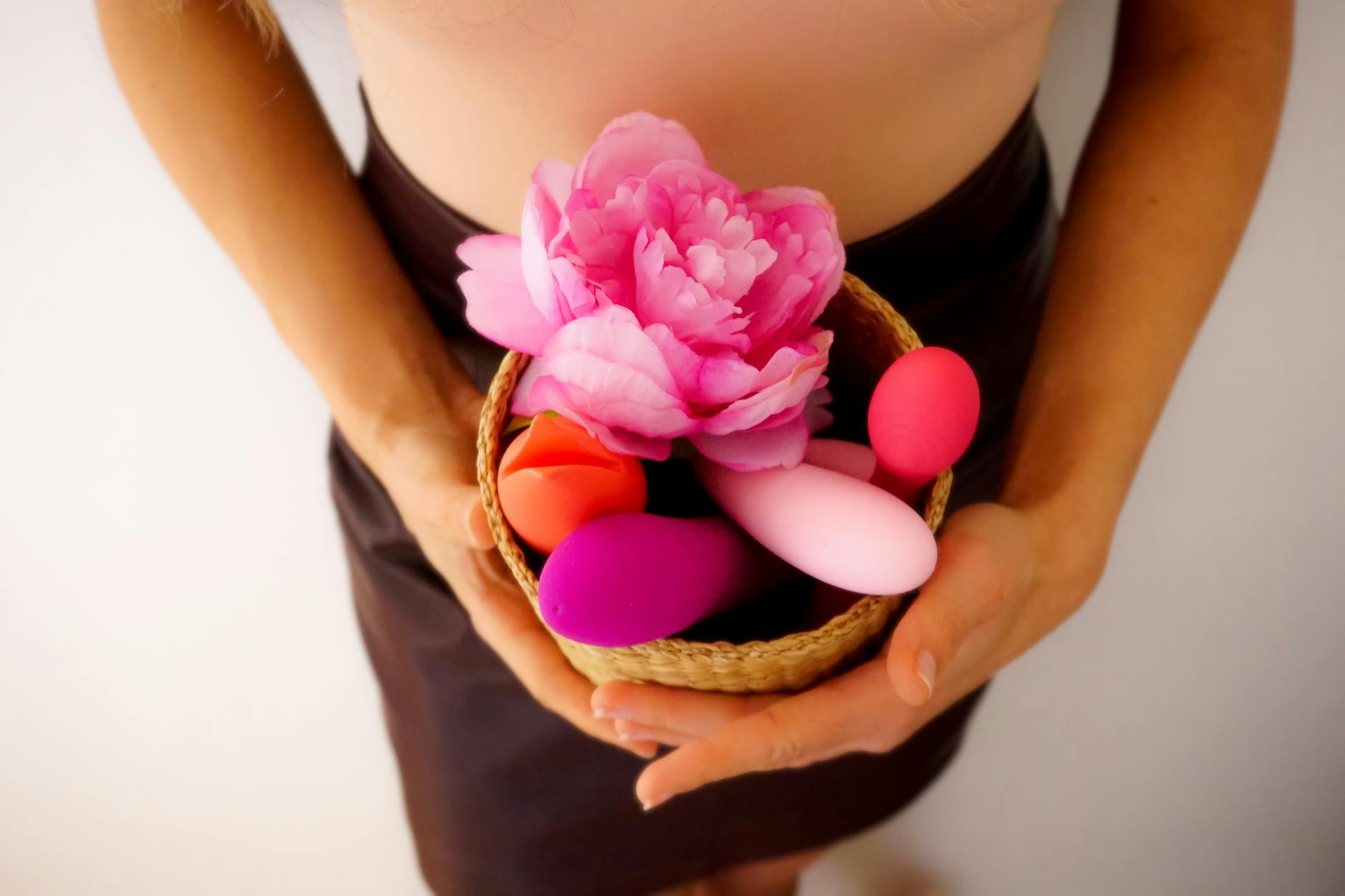
Here's what you're actually experiencing
Perimenopause is not menopause. This matters because what happens to your pleasure during these 5-10 years is different from what happens after your period stops completely. You're in a biological gray zone where estrogen swings wildly. Some days it's high. Some days it's low. Your body doesn't know which one it is, and neither do you.
That unpredictability is why you might feel desire one week and complete numbness the next. Why orgasms feel sharper sometimes and weirdly distant other times. Why lube suddenly became a necessity when it never was before.
What's actually changing (the good news is, not everything)
During perimenopause, three things shift.
First: tissue changes. Your vulva has estrogen receptors everywhere. When estrogen fluctuates, tissue gets thinner, less elastic, and less lubricated. This happens gradually, which means some days you barely notice it. Other days it's uncomfortable. The clitoris itself is less sensitive to direct touch because the tissue around it has changed. This is not permanent. This is cyclical.
Second: arousal takes longer. Your nervous system needs more time to shift into parasympathetic mode (the rest-and-pleasure response). Where you used to go from zero to sixty in five minutes, now it's fifteen. The engine is still there. It just needs a longer warm-up.
Third: sensation patterns shift. The kind of stimulation that worked at thirty might feel too intense at forty-five. Conversely, light touch that used to build excitement might now feel like nothing. This is why people often describe perimenopause pleasure as either too much or not enough. You're not broken. Your nervous system is recalibrating.
Here's what does NOT change: your capacity for orgasm, your desire for connection, or your ability to feel good.
Why lemon vibrators work during perimenopause
Let's talk about air suction technology. A lemon clitoral vibrator doesn't vibrate in the traditional sense. It uses gentle suction pulses that create a sensation like someone's mouth on your clitoris. Here's why this is genius during perimenopause.
It doesn't rely on direct pressure. During perimenopause, when tissue is changing, direct vibration can feel jarring or even painful. Air suction bypasses that problem. It stimulates the clitoris and the surrounding nerve endings without pressing on thin or sensitive tissue. It's like the difference between tapping someone on the shoulder and gently cupping your hand around their arm. Same goal. Different approach.
It builds sensation slowly. A lem vibrator has multiple intensity levels. You start at level one, and the suction is almost imperceptible. Then you move to level two, three, four. This graduated approach aligns perfectly with perimenopause arousal, which needs time to build. You're not forcing sensation. You're creating the conditions for it to emerge.
It feels more like partnered sex than a vibrator. The suction sensation mimics oral sex more closely than any other toy does. During perimenopause, when you're reassessing what pleasure looks like, this familiarity is comforting. You're not learning a new sensation from scratch. You're experiencing something your body recognizes, but amplified and more consistent.
How to actually use one during perimenopause
Start by setting the scene in a way that actually matters to you right now. That might mean more time. A partner in the room. A partner completely absent. A specific fantasy. Whatever removes friction from your brain so you can focus on sensation.
Step one: use lubricant generously. This is not optional during perimenopause. Water-based lube makes everything easier. It reduces friction, increases comfort, and honestly makes the suction sensation feel even better because there's no tugging. Reapply halfway through if you need to.
Step two: start at the lowest setting. Place the lemon clitoral vibrator directly over your clitoris and turn it to level one. You should feel a gentle rhythmic sensation, almost like a heartbeat. Spend 2-3 minutes here. Let your nervous system recognize the sensation. Let arousal start building without pressure.
Step three: move slowly through intensity levels. After a few minutes at level one, move to level two. Stay there for another few minutes. The point is not to race to the highest setting. The point is to let each level feel good before you move on. You might find that level three or four is your sweet spot, and you never go higher. That's perfect. There's no "supposed to."
Step four: play with position. Some people like the lemon vibrator directly on the clitoris. Others prefer it slightly off to one side, where more nerve endings cluster. Others want it angled downward toward the entrance. There's no right way. Your perimenopause body might have different preferences on different days, and that's normal. Experiment until you find what feels like the most pleasure with the least effort.
Step five: don't force the orgasm. During perimenopause, sometimes orgasm comes easily and intensely. Sometimes it builds slowly and then plateaus. Sometimes it doesn't come at all, and you feel amazing anyway. The goal is not climax. The goal is sensation and connection. If you chase the orgasm, you'll tense up, which makes arousal harder. If you just enjoy the feeling, orgasm often follows. And if it doesn't, you still had twenty minutes of pleasure, which is absolutely worth it.
Timing matters more than you think
Here's something most articles about perimenopause don't mention: your best sensation days often track with your cycle, even if your cycle is irregular. Many people find their arousal and sensitivity spike in the days right before ovulation, when estrogen is peaking. They tank in the few days after their period ends, when estrogen dips lowest.
You probably already know this on some level. You might have noticed you wanted sex more on certain days, or that certain kinds of touch felt amazing one week and didn't land the next. During perimenopause, this cycling becomes more extreme and less predictable. But if you start to track which days feel best, you can plan accordingly. Use your lem vibrator on days when arousal feels closer to the surface. On lower-sensation days, give yourself more time and gentleness.
This is not about forcing pleasure on bad days. It's about working with your body's natural rhythms instead of against them.
The mental shift that makes the biggest difference
Here's the thing I see most often with people navigating perimenopause pleasure. They assume something is wrong with them because sensation feels different. They're frustrated that arousal takes longer. They feel broken because direct vibration now feels uncomfortable when it never did before.
Then they use a lemon clitoral vibrator, sensation returns immediately, and they realize: nothing is wrong. Their body just needed a different tool.
That realization is huge. It moves you from "my pleasure is fading" to "my pleasure is evolving." And evolution usually means more options, more pleasure, more intimacy. Not less.
If you have a partner, this is worth saying out loud. "My body needs something different right now, and I found it." You're not asking them to do more or be different. You're solving the problem together by being honest about what works. And that honesty, weirdly, deepens connection.
FAQ: Your most-asked perimenopause pleasure questions
Is it normal for arousal to take longer during perimenopause?
Completely normal. During perimenopause, your nervous system needs more time to shift into parasympathetic (pleasure) mode. Estrogen fluctuations make this worse. Where you used to feel desire quickly, now your body might need 15-30 minutes of foreplay or solo time before you're ready. This is not a flaw. It's your nervous system being cautious during hormonal chaos. Budget more time. Use the extra warm-up as part of the pleasure, not a barrier to it.
Will my sensation come back after menopause?
Often, yes. The key word is after. During perimenopause, when hormones are swinging wildly, sensation is unpredictable. Once you cross into full menopause and your hormones stabilize at a new baseline, many people find their sensation stabilizes too. You might use topical estrogen cream to speed that up. But the worst of the wildness is usually in perimenopause itself, not after.
Can I use a lemon sucker vibrator if I have pain during sex?
Depends on the pain. If it's vaginal dryness or tissue sensitivity, yes. Air suction requires no pressure, which makes it gentler than vibrators. Add lube and start at the lowest setting. But if you have deep pelvic pain, or pain with penetration, talk to a doctor first. That might be vaginismus, pelvic floor tension, or something else that needs specific treatment. A lemon clitoral vibrator is a tool for pleasure, not a treatment for pain.
Does a lem vibrator work better than a traditional vibrator during perimenopause?
For many people, yes. Traditional vibrators create high-frequency vibration that can feel overwhelming on tissue that's already sensitive from hormonal shifts. Air suction is gentler and mimics a sensation your body already knows. But everyone is different. Some people love the intensity of a traditional vibrator even during perimenopause. The point is to try what appeals to you and see what actually works on your body.
How often should I use lemon sexual toys during perimenopause?
As often as you want pleasure. Using a vibrator doesn't make sensation worse. If anything, regular use keeps the nerves stimulated and active. Some people use lemon vibrators three times a week. Others use them daily. There's no quota. If you feel like using your lem vibrator, you're probably aroused enough to enjoy it. That's your signal.
Will hormonal birth control stabilize my sensation during perimenopause?
Maybe. If you're still having periods, hormonal birth control can even out estrogen swings, which steadies arousal and sensation. But it doesn't work for everyone, and it comes with other trade-offs. Some people on hormonal birth control have lower libido overall. Talk to your doctor about what might work for your specific situation. And remember, hormonal birth control is not the only tool. Lube, time, a good vibrator, and honest communication with yourself and your partner work too.
The bottom line
Perimenopause changes how you experience pleasure. It doesn't end it. And lemon vibrators, with their gentle air suction technology, are specifically designed for bodies going through exactly what you're going through right now. Start with lube. Start at the lowest setting. Give yourself time. Notice what days feel best. And remember that the goal is sensation and connection, not performance. Your pleasure matters, and it's absolutely worth investing in tools and time to bring it back.
If you want to explore other approaches alongside a lemon clitoral vibrator, check out how to use lemon vibrators when your body needs more time to warm up or how to rebuild intimacy after you feel disconnected from your body. Both have perimenopause-specific strategies that layer well with what we covered here.
Your body is not betraying you. It's asking you to slow down, pay attention, and explore what feels good right now. That's not a loss. That's an invitation.