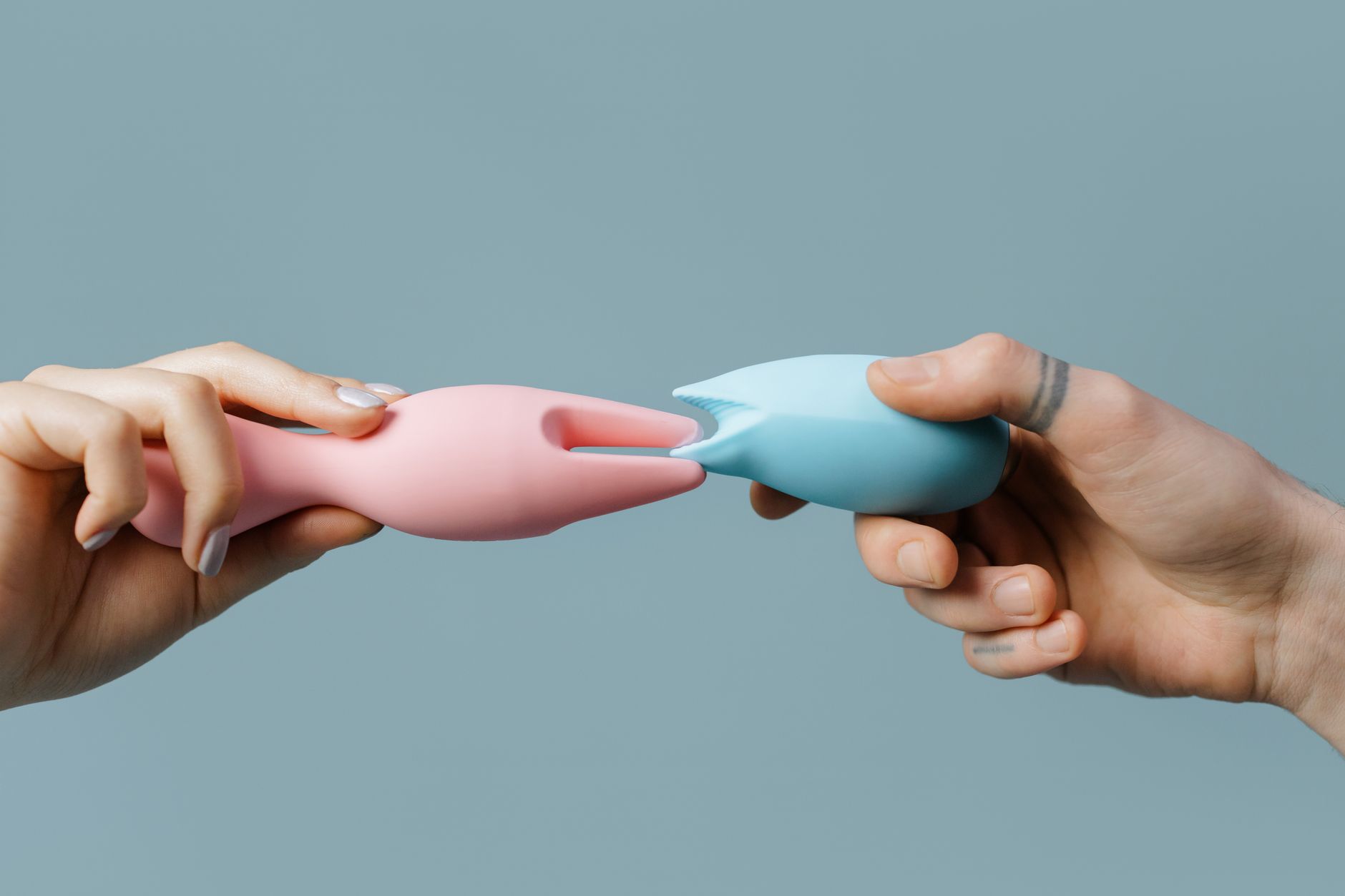
Here's the thing about vibrators and partnership
Most couples don't introduce toys because of desire. They introduce them because something's missing. Mismatched rhythm, difficulty reaching orgasm during penetration, or just the slow erosion of novelty that happens over years together. The vibrator becomes a solution to a problem instead of an invitation to something new. And that's where the weirdness lives.
Let's reframe this. A lemon vibrator isn't a band-aid for a broken sex life. It's a conversation waiting to happen. When you bring it in as an exploration, not a fix, the entire dynamic shifts. This isn't about "helping you finish." It's about discovering what feels better when you're not trying so hard to coordinate.
Why the actual resistance exists
The hesitation rarely comes from logistics. It comes from three places that sound different but feel the same.
First, there's the comparison anxiety. "Will my partner think they're not enough?" Listen: your body doesn't orgasm easily during partnered sex because your partner is failing. Your body works the way it works. A clitoral vibrator isn't an insult. It's information. It says "I want more, with you, in this way." That's not rejection. That's specificity.
Second, there's the vulnerability piece. Introducing something new requires admitting you want it. Some people spend years not mentioning it because admitting the desire feels risky. The conversation itself becomes scarier than the thing being discussed. But I've watched couples with solid foundations navigate this in two conversations. The couples who struggle? They're usually avoiding a different conversation altogether.
Third, there's the logistical fear. "How do I even bring this up without making it weird?" You will make it slightly weird. That's fine. The weirdness lasts about ninety seconds, then vanishes. Most couples report that the awkwardness of the conversation is significantly worse than the actual experience.
The conversation you need to have first
Don't introduce a lemon vibrator during sex. That's a setup for awkwardness, miscommunication, and defensive reactions. Talk about it when you're clothed, fed, and not in the bedroom.
Here's a framework that works:
Start with desire, not the tool. "I've been thinking about what would feel good for me in bed, and I want to try something new. I'd like to explore using a vibrator during sex with you. Not instead of you. With you." That distinction matters. You're not replacing the partner. You're adding something to the shared experience.
Then be specific about why. "When we have sex, I usually get close but not quite there, and I think a vibrator would help me actually finish. I want to feel that release with you, and I think this would make that possible." Clarity removes the space where insecurity grows.
Then invite collaboration. "I ordered one that I think might work. Want to look at it together, or would you rather I surprise you when we try it?" Some partners want autonomy in the choice. Some want to be surprised. Both are fine. You're asking, which is the whole point.
If the response is defensive, you're not having a vibrator conversation. You're having a trust conversation. That's bigger and needs more time. But most solid relationships? They move through this in one honest chat.
How to integrate it into actual sex
Once you've talked about it, the mechanics are simpler than you think.
Start with direct stimulation in isolation. The first time, use the vibrator solo. Let your partner watch. Show them what feels good, where you like the pressure, which speeds work. This does two things: it removes the pressure to perform while they're watching, and it gives them a map. They're learning your pleasure in real time.
Then bring them back in. "Now I want to try it while you're inside me." Or while they're touching you. Or while you're touching them. The specific positioning depends on your bodies and what feels natural, but the principle is the same. The vibrator isn't replacing their participation. It's augmenting it.
Manage the intensity carefully. Lemon clitoral vibrators work differently than standard wand vibrators. The suction patterns create sensation without the blunt pressure of traditional toys, which makes them gentler to combine with partner contact. Start at lower intensities. You can always increase. You can't un-overstimulate in the moment.
If penetration is involved, angle the vibrator so it's stimulating the clitoris from the side or front, not directly competing with the penetration. Some couples find that a vibrator works better during foreplay, then gets set aside when they're inside each other. Others integrate it throughout. Neither approach is wrong.
The emotional architecture matters more
Here's what I see break couples: they introduce the toy, use it, and then never talk about it again. It becomes this thing they do, but not something they've processed together. That's a missed opportunity.
After sex, when you're both relaxed and close, ask what worked. "That felt incredible. What did that feel like for you?" Maybe they loved watching you finish. Maybe they felt a bit left out. Maybe they want to try it differently next time. These conversations actually strengthen connection because they're explicit negotiation about pleasure. You're not assuming. You're asking.
If things feel distant afterward, that's worth naming too. "I noticed you seemed quiet after. Did something feel off?" The vulnerability of using a toy together can surface insecurity that wasn't directly about the toy. Sometimes there's old stuff that needs air. That's not the toy's fault. That's just what intimacy requires.
When arousal feels slow to build with age, partners sometimes feel like they're the cause. A shared conversation about what's actually happening neurologically and hormonally can shift that blame into curiosity. "Your body isn't broken. This is just how arousal works now. Let's figure out what feels good" changes everything.
Specific patterns that deepen connection
The mutual learning curve. The first few times you use a vibrator together, you're both learning. Your partner's learning where to touch you while the vibrator's running. You're learning what combinations feel transcendent versus overstimulating. That shared learning is intimacy. You're solving a puzzle together.
The permission structure. Using a vibrator together gives partners explicit permission to prioritize your pleasure. There's no ambiguity. You both agreed this is about what feels good for you. That clarity actually reduces performance pressure on both sides. Your partner doesn't have to "make you come." They just have to be present while you finish.
The reveal moment. Many couples find that the moment when orgasm arrives, when your partner sees or feels you come using the vibrator, actually intensifies the feeling. It's not impersonal. It's the opposite. It's being truly seen. Your partner witnesses your pleasure at its most honest.
When you want solo pleasure as a couple, you're actually deepening the same dynamic. You're learning about your own arousal while your partner learns about yours. That knowledge becomes the foundation for better partnered sex.
What to avoid
Don't introduce it as "since I can't come any other way." That sounds like defeat, not desire. Frame it as "I want to try this because I think it would feel even better."
Don't spring it on your partner during sex without a conversation. That's not spontaneous. That's risky. Have the talk first.
Don't make it the entire focus of sex. Use the vibrator for foreplay or finishing. Keep the rest of the interaction partner-centered. The toy is one element, not the whole show.
Don't go silent afterward. Talk about it. "That was hot" works. "I felt disconnected" also works. Both need to be sayable.
The thing nobody tells you
Couples who integrate toys together often report that their overall sexual connection deepens. Not because of the toy itself, but because they had to talk about desire explicitly. They had to negotiate. They had to be honest about what wasn't working. That honesty translates everywhere else in the relationship.
Your partner doesn't feel like they're not enough. They feel like they're enough and you want more. Those are entirely different things. And that's actually the whole point.
Frequently asked questions
How do I know if my partner will react negatively?
If your relationship has solid trust and you've talked about sex before, the risk is lower than you think. The conversation might feel awkward for five minutes. The actual use is usually fine. If you're genuinely worried about a hostile reaction, that's information about your relationship that a vibrator won't fix. That's worth addressing separately, ideally with a couples therapist who can help you build a foundation where this kind of conversation feels safe.
What if my partner wants to use it on me but I want to use it myself?
You get to decide how it's used on your body. "I want to hold it and control the speed and pressure" is a completely valid boundary. Some partners love giving you the vibrator and watching. Some want to be more hands-on. Talk about which feels good for both of you. There's no right way.
Should we buy the vibrator together or should I surprise them?
If your partner is enthusiastic about the idea, shopping together can be fun and collaborative. You're literally picking something to share. If they seem hesitant, buying something and having it arrive makes the introduction feel lower-pressure. They don't have to commit to it in a store. They can see it, get curious, and then try it. Both approaches work depending on your dynamic.
Can we use it if I have a new partner?
Yes, with one adjustment. You'll want to have the conversation even earlier in the relationship. Sexual compatibility is a legitimate part of early-relationship compatibility. If someone's going to be weird about you needing a vibrator, better to know that in month two than month six. Frame it as part of how you like to have sex, not as a problem you're solving.
What if the vibrator doesn't work for me in partnered sex even though I like it solo?
That's genuinely common. Solo pleasure is different from partnered pleasure. The mental state is different. The sensations are different. If it doesn't work in the moment, set it aside and try again later. Or try it in foreplay instead of during penetration. Or bring it back out halfway through. You're experimenting. Not everything lands every time. That's fine.
How do I handle it if my partner seems hurt that I need a vibrator?
That hurt usually isn't about the vibrator. It's about a story they're telling themselves about what it means. Your job is to be clear: "My needing this has nothing to do with you not being enough. It has to do with how my body works. I want to explore this with you because I want to feel more pleasure in our sex life." Sometimes you need to say that more than once. Sometimes you need to hear their specific fear before you can address it. But it's addressable. Most of the time.
Connection deepens when you can be honest about desire, including the desire for tools and techniques that help you feel more pleasure. A vibrator is just permission in silicone. You're saying "I matter enough to prioritize my pleasure." Your partner gets to witness that. That's intimacy.
The bigger picture
Introducing lemon vibrators into your partnership is less about the toy and more about the conversation. It's about admitting you want something specific. It's about inviting your partner into that want rather than hiding it. It's about learning your own pleasure in front of someone and trusting them to stay curious instead of defensive.
That's not a small thing. That's the foundation of sexual connection that actually lasts.