Let's talk about the thing nobody wants to admit
You're ready. Your partner isn't. Or the reverse. Or one of you gets there fast and stays, while the other takes longer to build and crashes faster when done. This is wildly common, and it's also wildly frustrating because the cultural script tells you it should all just happen in sync if you love each other enough.
It doesn't work that way. Bodies don't work that way. And pretending they do just makes both of you feel broken.
Why arousal rhythms get out of sync in the first place
There are about six variables that control how fast someone gets turned on and how long they stay there. Some are biological, some are circumstantial, and some are a mix.
Temperament matters. Some people have naturally higher baseline arousal. If you've got a responsive nervous system, you can shift into pleasure quickly. Others need longer to transition. Neither is better. They're just different.
Stress loads matter too. If one partner just had a brutal day at work and the other has been home relaxed, that gap shows up immediately. Hormones shift it. Medication shifts it. Caffeine, sleep, whether someone's mind is actually present or stuck at the office. Even what happened earlier in the week affects it.
Then there's the historical piece. If one of you has spent years prioritizing the other person's pleasure over your own, your arousal might be underperforming. If someone's been numb from medication or just routine, it takes longer to wake up. None of this is pathological. It's just what happens when you've been in sync long enough to get out of sync.
The problem with waiting for the other person
Here's where most couples get stuck. One person is ready first, so they wait. They slow down, they distract themselves, they try to sync up. It feels considerate. It also trains your nervous system that pleasure is something you negotiate down, not something you claim for yourself.
Meanwhile, the slower partner feels pressure to hurry up. The clock is ticking. This person who was ready is now checking in, slowing down, waiting. That pressure kills arousal dead.
Both of you end up frustrated. You feel like you're doing something wrong. You're not. You're just using the wrong tools.
How lemon vibrators change the equation
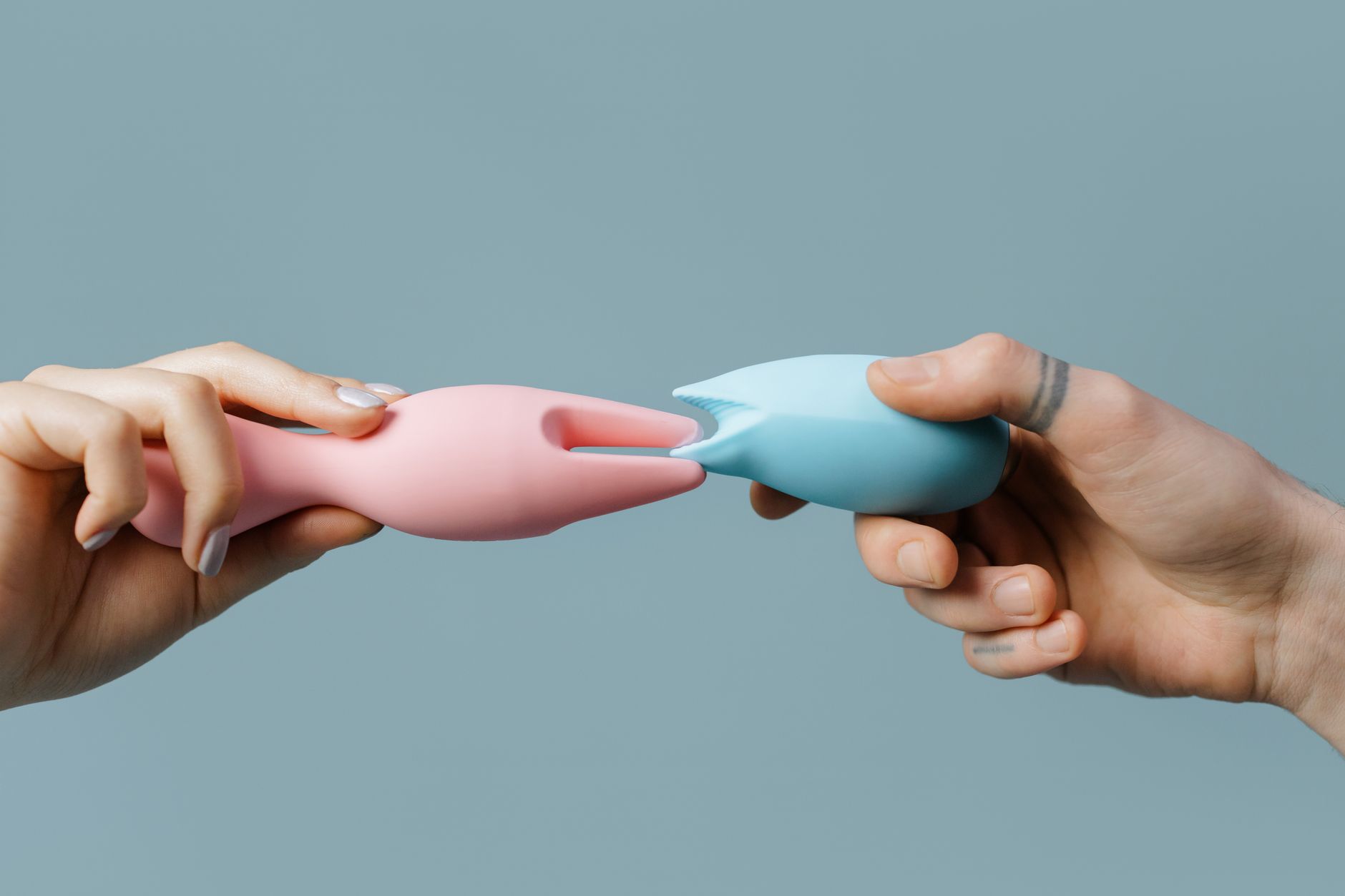
A good clitoral vibrator like the Lemon doesn't require your partner to be at the same place you are. It works independently. It doesn't care if you took 30 seconds or 30 minutes to get there. It doesn't get tired or frustrated. It delivers consistent sensation exactly when you need it.
This sounds simple. It is. But it's also revolutionary because it removes the performance pressure from both sides.
If you're the one who's ready first, a lemon vibrator means you don't have to wait. You can build your pleasure while your partner is still warming up. If you're the one who takes longer, you can keep going without making your partner hold still. They can move, breathe, be present without that ticking-clock feeling.
The vibrator becomes a bridge, not a backup.
The practical setup that actually works
Timing matters here, but not in the way you might think. Don't wait until you're already in bed and one person is ready while the other is struggling. That's panic mode.
Instead, talk about it earlier. Not during sex. Earlier. "I've noticed we sometimes get to different places at different speeds. I want to try something that might help." That's it. You're naming the pattern without blame. You're proposing a solution.
When you get into it, start together. Foreplay that includes the vibrator for whoever wants it. If you're using a lemon vibrator, start with it on a lower pattern. Something light enough that it enhances sensation without dominating it. Lemon toys like ours work beautifully because the suction pattern feels different from traditional vibration. It's more like a gentle pulling sensation than a rattle.
One partner might use it solo. One partner might use it while another does something else. Some couples use it together. The shape of a lemon vibrator means two people can touch it at the same time, which is weirdly intimate if you want it to be.
There's no rulebook here. The point is that arousal can happen at different speeds because the speeds don't have to sync anymore.
What changes when you stop trying to be in sync
You probably think adding a tool makes sex feel less connected. The opposite is true. Removing the pressure to perform synchrony actually deepens connection.
When you're not fighting your own body, you can be present with your partner. You can notice them. You can breathe. You can feel pleasure without that little anxious voice asking whether you're taking too long or moving too fast.
Your partner gets the same gift. They're not watching the clock. They're not adjusting their response to match yours. They're actually available.
That availability is the whole thing.
Handling the mental piece
Lots of people have a story that using a vibrator means something is wrong. That they should be enough. That adding something else is admitting defeat.
I'd reframe it. A vibrator isn't a replacement for your partner. It's an answer to a real biological difference. Just like one person wearing glasses doesn't mean the other person is failing them. Some bodies need different tools to feel pleasure. That's not a failure of love or connection. That's biology.
If that narrative is stuck, say it out loud to each other. "I'm worried this means we're not compatible." "I'm afraid you'll resent me for taking longer." Once it's spoken, you can actually address it instead of letting it poison the experience.
When to use it and when to skip it
You don't need a lemon vibrator every single time. Some sessions, arousal lines up fine. Use the tool when you need it. Skip it when you don't. This isn't about creating a dependency. It's about having options.
If one of you is exhausted, skip it. If you're both in a rush, skip it. If one person isn't interested, skip it. A vibrator is an invitation, not a requirement.
The best version of this is when both partners want it sometimes and feel totally fine without it other times. That flexibility is what makes it work long-term.
The conversation after
After you try it, check in. Not in a clinical way. Just, "Did that feel better?" "What did you like about it?" "Want to do it again next time?" Sometimes one person loves it immediately and the other needs a few tries. That's normal. Let it breathe.
Lemon vibrators and other clitoral toys are becoming normal enough that you don't have to treat them like some big relationship turning point. You can use one the way you'd use lube or a pillow. It's just something that makes things feel better.
The real payoff
When arousal rhythms aren't battling each other anymore, everything else relaxes. You can enjoy foreplay for longer because nobody's watching the clock. You can try things you couldn't try before because you're not defending against invisible pressure.
You remember why you wanted to be with this person in the first place. Not because the sex got instantly better, but because the fight went away.
People also ask
Can using a lemon vibrator make my partner feel replaced?
Not if you're clear about what it's for. A clitoral vibrator isn't a replacement for your partner. It's a tool that lets arousal happen at different speeds without either of you feeling rushed or stuck. Many partners actually feel relieved because it removes the pressure to perform synchrony. The vibrator does the holding at intensity while your partner can just be present.
How do I bring this up without hurting my partner's feelings?
Frame it as solving a problem together, not blaming anyone. "I've noticed we sometimes get out of sync, and I want us both to feel good. I've heard lemon vibrators can help with that." You're naming a pattern, not a failure. You're offering a tool, not an ultimatum. If your partner resists, ask what the worry is underneath. Usually it's the same fear you had. Once it's spoken, you can address it.
What if my partner doesn't want to use a vibrator?
That's okay. It's one option, not the only option. You could try different timing for sex, more foreplay for the slower partner, or just accepting that some sessions are less synchronized than others and laughing about it. The vibrator is a solution if both people want one. If one person strongly prefers not to, respect that and find something else.
Do lemon vibrators work for every body type?
Yes. The suction mechanism on a lemon vibrator works beautifully on all vulva shapes and sizes. Unlike some toys that require very specific contact angles, the design of a lemon toy is forgiving. Start on a lower pattern, add lube if you like, and let your body tell you what feels good.
How often should we use a vibrator if we're out of sync?
There's no schedule. Use it when you need it, skip it when you don't. Some couples use one a few times a week. Others use one occasionally. The point is that it's an option when arousal rhythms aren't lining up. It's not a dependency thing. It's a tool.
What if the vibrator doesn't help?
If arousal timing is still a problem after trying a lemon vibrator, there's often something else underneath. Sometimes it's stress, sometimes it's resentment about something unrelated to sex, sometimes it's a medication side effect. If this persists, talking to a couples therapist or a doctor can help you figure out what's really happening. The vibrator is one answer, not the only one.
The bigger picture
Out-of-sync arousal feels like a sign that something's wrong with the relationship. It's not. It's actually pretty normal, especially as couples move through different life phases. One person gets busier, more stressed, shifts onto medication, ages differently than the other.
The tool you use to handle that matters. If you're both white-knuckling it and pretending everything's fine, tension builds. If you name it and find something that works, it becomes just another rhythm you've learned to navigate together.
A lemon vibrator is small, practical, and honest. It says: I want both of us to feel good, and we don't have to pretend we're built the same way to make that happen. That's not settling. That's actually knowing how to stay connected across real differences.