Honestly, this one lands different after forty. You remember your orgasms. They were sharper, faster to build, sometimes full-body. Now they're quieter. Still present, but like someone turned down the volume without your permission.
Here's what everyone gets wrong: your capacity for pleasure didn't shrink. Your tissue did. And once you understand the difference, you can actually work with it instead of against it.
Estrogen doesn't vanish overnight, but it trends downward. This affects the vaginal wall directly. The tissue becomes thinner, less elastic, and it loses some of the blood flow patterns that create that intense, full sensation during arousal. Think of it less like losing your nerve endings and more like losing the surrounding insulation that made them fire in a particular way.
The clitoral structure itself doesn't change much. The nerve density stays the same. But the tissue around it loosens slightly, and the muscle tone shifts. For some bodies, this means orgasms feel less peaked, less like a crescendo and more like a gentle swell.
That's where most people stop thinking and assume they're broken. They're not.
A traditional vibrator works by creating direct pressure and friction against tissue. Fifteen years ago, that friction felt incredible because the tissue had more elasticity and blood flow to respond intensely to stimulation. Your body could meet the vibration halfway, amplifying the sensation.
After forty, that same direct pressure can actually feel duller. The tissue is thinner, so the vibration doesn't propagate through it the way it used to. You need more intensity to feel the same amount, which exhausts the tissue faster and can create a kind of plateau where intensity stops translating into sensation.
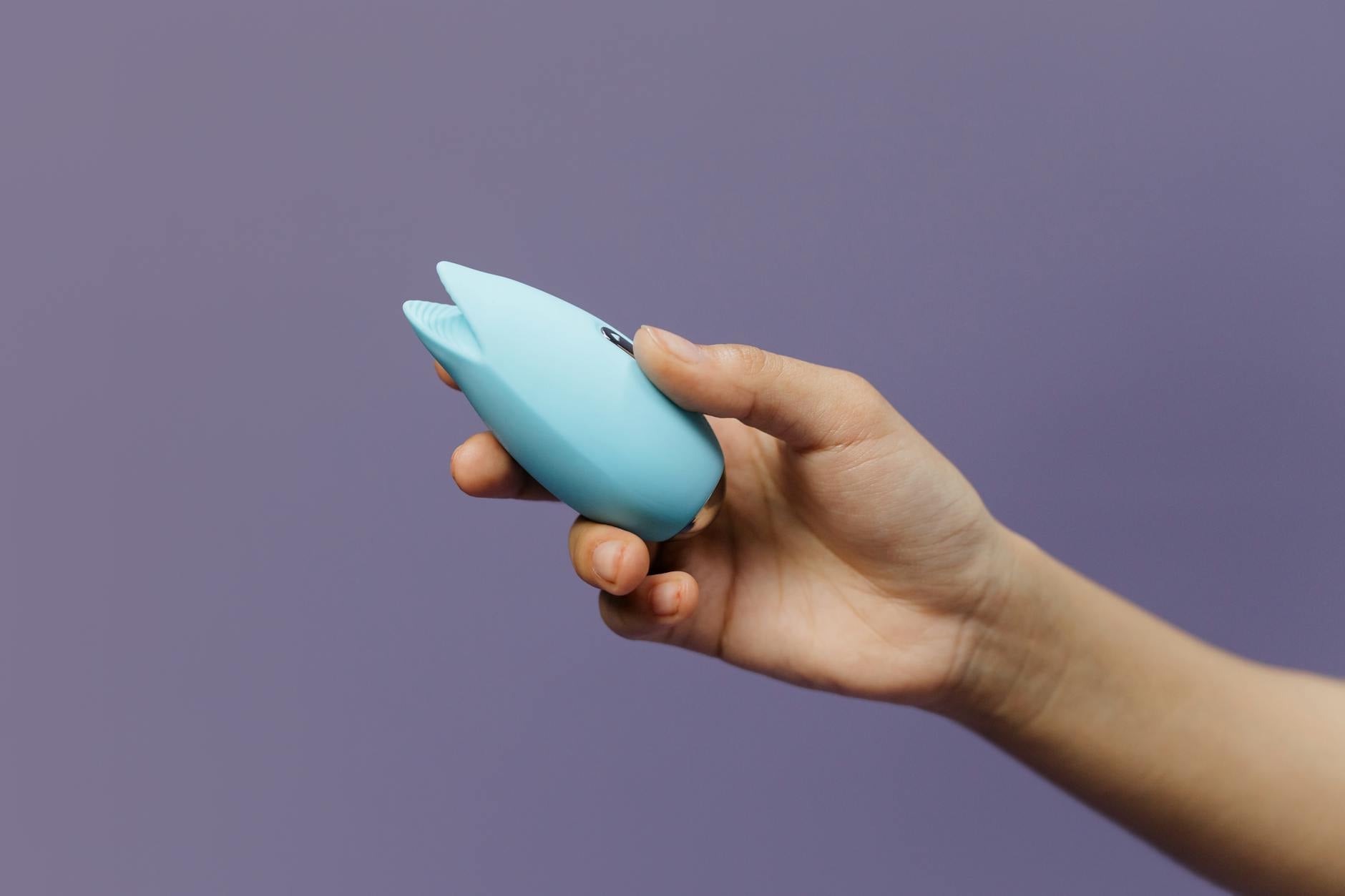
The lemon vibrator (and similar air suction devices) uses gentle pulsing air to create stimulation. Instead of pushing into tissue, it creates a rhythmic compression around the clitoris. This actually restores some of what forty takes away.
Three reasons why:
1. It doesn't require tissue thickness to work. The suction pattern operates on the principle of pressure change, not direct pressure. Thinner tissue still responds to pressure differentials. You're not grinding against a wall that's lost its bounce. You're experiencing a wave.
2. It replicates earlier arousal patterns. Remember when arousal felt like a tightening sensation, like something was building and compressing inside? Air suction mimics that. It activates different nerve pathways than direct vibration, ones that often feel sharper and more defined even in tissue that's become less elastic.
3. It feels faster. Because the sensation is different, the arc from baseline to orgasm shortens. You're not asking tired tissue to produce the same friction-based response. You're asking it to respond to something closer to its native language.
This is non-negotiable after forty. Your body isn't moving slower because you're lazy or uninterested. Arousal requires more blood flow, and blood flow takes time. Plan for 20 to 30 minutes of foreplay or solo exploration before using the lemon vibrator.
This isn't a limitation. This is where you actually start to feel the difference from your thirties. Extended foreplay creates a completely different kind of orgasm. It's less spike-based and more deeply satisfying. Most of my clients report that post-forty orgasms, when they build through genuine foreplay, feel richer and more complex.
Without the warm-up, you're asking thin, less-engorged tissue to create sensation it can't yet produce. The vibrator won't feel weak. You will.
Your pelvic floor has spent forty years supporting organs and creating tension during sex. After forty, that same muscle starts to lose estrogen-dependent tone. It tightens differently. Sometimes it won't relax fully, which blocks some of the deeper sensations.
Before using a lemon vibrator, spend five minutes intentionally relaxing your pelvic floor. This sounds backward because we're taught to do Kegels to tighten and strengthen. You need both. Kegels built strength. Now you need releases.
Lie down, breathe slowly, and consciously let the area soften. Imagine the base of your pelvis getting heavier, sinking into the mattress. This single shift often restores a full point or two on the pleasure scale.
Start at Pattern 1 or 2 on the lemon vibrator. Intensity matters less than rhythm after forty. Your tissue responds better to a consistent, predictable pulse than to bouncing between intensities.
Many bodies over forty report that Patterns 3 to 5 (the more varied, complex rhythms) feel more satisfying than pure strength settings. The lemon's patterns actually mimic arousal progression better than constant intensity. Let the device do the building for you instead of you having to build intensity yourself.
If you're not feeling much, the instinct is to turn it up. Resist. Go longer instead. Give yourself an extra ten minutes at a lower setting. Tissue response is slower but often more complete when you stop chasing speed.
Yes, even if you had natural lubrication your whole life. After forty, the vaginal wall produces less liquid, and that affects both comfort and sensation. Water-based lube actually enhances the air suction experience because it helps create a better seal and smoother pressure transitions.
Use it generously. This isn't compensation. This is working with your body's current reality.
If you're with a partner who watched your orgasms go from five-minute events to fifteen-minute events, they might think something's wrong. It's not. It's different. Different doesn't mean broken.
The most useful conversation is this: "My arousal takes longer now and feels more complex. I want us to slow down together." That's not a complaint. That's an upgrade if both of you show up for it.
When using lemon vibrators with a partner, the extended warm-up and slower pace actually create more connection. You're not rushing to a finish line. You're building something together.
Some bodies over forty are still in regular menstrual cycles. Others have started irregular patterns. Still others are menopausal or post-menopausal. Each phase affects sensation slightly differently. If your orgasms feel weaker and you also notice your cycle has changed, that's not coincidence. That's hormonal shift.
This isn't something a vibrator fixes alone. But it's something a vibrator can work with. The lemon vibrator is genuinely one of the better tools for bodies in hormone transition because air suction doesn't depend on the friction capacity that hormones control.
Your clitoris needs recovery time after orgasm. In your twenties and thirties, you could often jump straight to another one. After forty, you need five to ten minutes before you're sensitive enough for meaningful stimulation again.
This is why session length matters more than intensity. Instead of three intense five-minute sessions, aim for one twenty-minute session with the lemon vibrator. You get more time for arousal to build, better physical response, and actual satisfaction.
If your orgasms weakened suddenly, not gradually, something else might be happening. Medication changes, blood pressure shifts, thyroid changes, relationship stress. None of these are vibrator problems.
If you're on antidepressants, birth control, or blood pressure medication, that's worth discussing with your doctor specifically about sexual sensation. It's not taboo and it's not unsolvable. Many medications can be adjusted.
If the weakening coincides with relationship distance, that's a different conversation. A lemon vibrator will help you reconnect with solo sensation, but it won't fix emotional disconnection. You might need both.
Here's what I see happen when people over forty actually switch to air suction tools like the lemon vibrator: they often discover orgasms they've never felt before. Not stronger necessarily. Stranger. More distributed. Less about one point of sensation and more about whole-body involvement.
This sounds like platitude territory. It's not. The physiological shift that makes traditional vibrators feel weaker actually creates conditions for different kinds of pleasure to become accessible. You're not chasing what you had. You're discovering what's now possible.
Estrogen supports blood flow, tissue elasticity, and nerve sensitivity in the pelvic region. As estrogen gradually shifts after forty, tissue becomes thinner and blood flow patterns change. Your nerve endings still function perfectly. The surrounding tissue that amplified sensation has less elasticity to work with. This is completely normal and completely addressable.
Yes, specifically because air suction doesn't depend on tissue friction the way traditional vibrators do. The lemon clitoral vibrator creates stimulation through pressure and release rather than direct vibration. This works better with thinner, less elastic tissue and often restores the sensation speed and intensity people remember.
Not necessarily. In fact, the opposite is often true. Bodies over forty respond better to consistent, moderate patterns than to maxed-out intensity. The lemon vibrator's varied patterns actually mimic arousal progression, which feels more satisfying than pure strength. Start low and give yourself time.
Completely normal. Arousal requires blood flow, and blood flow takes more time in bodies experiencing hormonal shifts. This isn't a sign of lost desire. It's a sign that your arousal is deeper and more complex. Extended foreplay actually creates more satisfying orgasms because you're giving tissue time to respond fully.
Yes. Water-based lubricant helps create a better seal for air suction and smooths pressure transitions. Using lube isn't admitting defeat. It's acknowledging your body's current reality and working with it. Generously applied water-based lube actually enhances the whole experience.
Possibly. Antidepressants, blood pressure meds, birth control, and thyroid medication can all affect sensation and arousal. This is worth discussing with your doctor specifically about sexual function. Many adjustments exist. Don't assume it's just age.
Your capacity for pleasure didn't leave. It transformed. The lemon vibrator is genuinely one of the better tools for exploring that transformation because it works with what your body can do now instead of asking you to recreate what it did at thirty.
Give yourself real warm-up time. Use the lower patterns. Add lubricant. Relax your pelvic floor. Then notice what you actually feel instead of what you think you should feel.
Your orgasms aren't weaker. They're different. And honestly, that's where the good stuff happens. If you want to explore this more, reach out. I'm here.