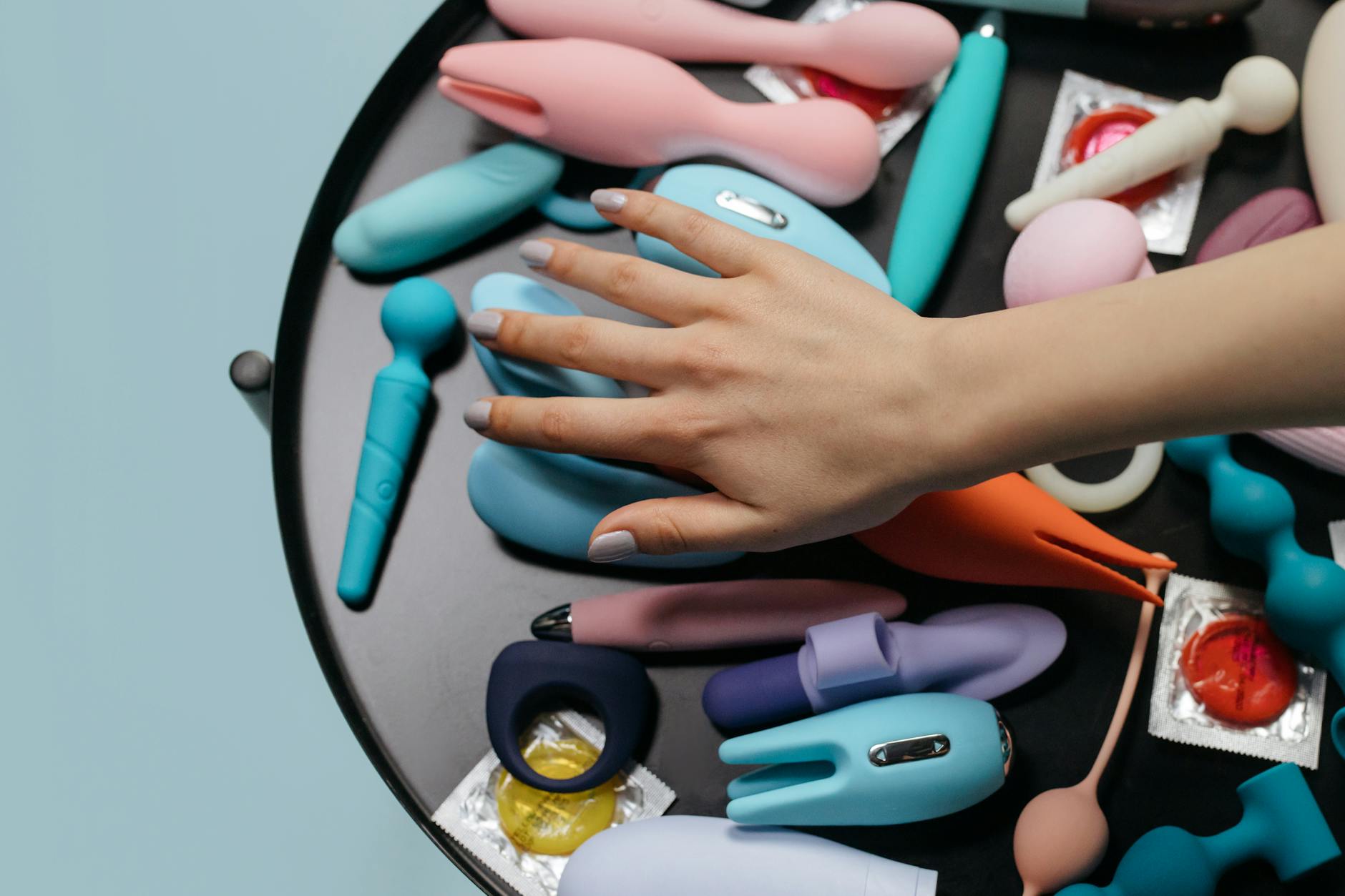
When stress steals your desire, your body isn't broken
Relationship conflict doesn't just affect your mood. It kills arousal at the physical level. Your nervous system goes into protection mode. Blood flow redirects away from pleasure and toward survival. Desire doesn't vanish because you don't care about your partner. It vanishes because your brain is too busy processing threat.
I work with couples regularly who describe exactly this: they love each other, the crisis passes, but arousal stays offline for weeks. They try to force it. They feel guilty. They worry it means something terminal. None of that helps.
Here's what actually works: rebuilding desire requires you to remember what arousal feels like in your body, completely separately from your relationship. That's where a lemon clitoral vibrator enters the picture.
The neurobiology of desire after conflict
Your brain has a threat-detection system. When relationship stress is high, this system stays active even after the argument ends. Cortisol and adrenaline don't clear immediately. Your nervous system remains vigilant.
Arousal requires the opposite state. It needs parasympathetic activation. Rest mode. Safety signals.
Trying to have sex while your nervous system is in protection mode doesn't feel sexy. It feels obligatory, numb, or frankly triggering. Your body isn't refusing pleasure. It's telling you it doesn't feel safe enough for pleasure yet.
That's why solo exploration with a tool like the Lem works better than anything else as a reset. You're not managing anyone else's expectations. You're not recreating the scene where conflict happened. You're simply reintroducing your nervous system to the sensation of pleasure in a controlled, low-stakes space.
Why the right vibrator matters when you're disconnected
Not all vibrators are equal here.
If you've been numb or distant, your tissues might feel less responsive. Standard vibrators that rely on rapid buzzing can feel irritating rather than pleasurable when your nervous system is wound tight. You need something that doesn't demand immediate intensity.
The Lem works differently. Air-suction technology stimulates without the blunt vibration that can feel jarring when you're already defended. It's rhythmic without being aggressive. You control the pattern. You can start at pattern one, which feels almost meditative, and layer in intensity only when your body asks for it.
That control matters psychologically too. When stress has made you feel powerless in your relationship, reclaiming full agency over your own pleasure becomes grounding.
The mechanics of rebuilding arousal after disconnection
Three steps that I recommend to almost every client working through this:
Step one: Start small and consistent.
Don't aim for orgasm. Aim for sensation. Spend ten to fifteen minutes three times a week with just the Lem at the lowest settings. No agenda. No performance goal. Just noticing what feels good.
Consistency matters more than duration. Your nervous system learns that this time is safe. It begins to anticipate it. Arousal starts to rebuild before you even realize it's happening.
Step two: Separate solo pleasure from couple intimacy.
This is crucial. If you go straight from solo exploration to sex with your partner, you collapse them back into one thing. Your nervous system won't fully relax in either space.
Instead, keep them completely separate for the first two to three weeks. Solo time is just yours. Couple time is happening alongside but isn't using the same tools or mindset. This boundary actually rebuilds desire for partnered sex because it stops forcing connection when the nervous system isn't ready.
Step three: Notice what your body is telling you.
After ten to fifteen minutes with the Lem, pause. What feels different in your body? Warmer? More awake? Slightly more in your skin? These micro-improvements are real. They're your nervous system gradually learning that pleasure is safe again.
Don't judge the experience. Some sessions will feel amazing. Some will feel nothing. Both are okay. You're building a container, not chasing a feeling.
What changes when your nervous system begins to settle
After two to three weeks of consistent solo practice, you'll notice something shift. You might find yourself thinking about pleasure at random moments. You might feel slight arousal during an ordinary day. You might actually want to touch yourself instead of forcing it.
That's your signal that your nervous system is beginning to feel safe. Only then does partnered intimacy make sense.
When you do return to sex with your partner, your nervous system doesn't start from zero anymore. It has recent evidence that arousal is possible, that pleasure isn't dangerous. That changes the entire experience.
Many couples find that after stress-induced disconnection, their best sex comes after they've individually rebuilt their own arousal response. Paradoxically, less pressure on the relationship to fix it means the relationship can actually begin to heal.
When to bring your partner into this process
Honestly though, at some point your partner needs to know what's happening.
Not to join you. Not to monitor you. But to understand the timeline. To know that desire is being rebuilt and it takes patience.
The conversation matters. Avoid "I'm not attracted to you anymore." Say instead: "After this stress, my nervous system needs time to remember what arousal feels like. I'm working on it separately so we can come back together stronger."
That's different. It's factual. It removes blame. It signals that you're taking responsibility for your own desire while also being honest about the process.
Partners who understand this typically become more patient. They might reduce pressure. They might start rebuilding their own safety too. Conflict often improves simply because the desperation to fix intimacy immediately lets up.
Red flags that mean talking to a therapist
If after six weeks of consistent exploration you feel nothing, talk to someone. That might signal depression, dissociation, or trauma that deserves clinical attention.
If you feel resentment instead of relief when using the vibrator, that's also worth exploring with a therapist. Resentment typically points to unresolved conflict with your partner that can't be worked around through solo exploration alone.
If you feel pressure from your partner to hurry up and get your desire back, that's a relationship dynamic that needs professional support. Healing timelines can't be rushed by external demands.
These aren't failures. They're signals that the path to reconnection involves more than nervous system recalibration.
The reality of rebuilding after stress
Relationship stress doesn't end desire permanently. It just puts it offline temporarily. Your capacity for pleasure didn't leave. Your nervous system did.
Giving yourself permission to explore that capacity alone, with a tool designed to meet you where you are, isn't selfish. It's actually the most direct path back to shared intimacy. When you rebuild arousal in your own body first, you stop trying to manufacture it for someone else's benefit.
That shift alone transforms everything.